Tuesday, May 31, 2011

Keep Birds out of Your Fruit Trees

Fruit trees are a delicious source of meals for our feathered friends. But with all the work that we put into growing these trees so that we can have the harvest for ourselves, it is often times very agitating to realize that you are sharing your harvest with a bunch of cute little free loaders.


So some steps that you can take to prevent birds from eating all your apples, cherries, etc. are as follows:
  • Reflective objects tend to cause birds to not want to be near the source of this strange light. Also noise is rather bothersome to birds. So one way to knock out two birds with one stone (ha, ha, sorry couldn't help myself) is to find some reflective bells that could be strung together so that not only are the bells ringing, but they are also clanging into each other for even more noise effect.
  • Birds also don't like being doused with water when they are not expecting it, you might want to consider installing timed sprinklers near your tree so that if birds are resting there they get a sudden cold shower.
  • If birds have an even easier food supply to get food from they won't want to bother with the fruit trees. Distract them with bird feeders placed away from the trees (but close enough that they will visit the feeder instead) do a little research on the types of birds that are "visiting" your fruit trees and find out which seeds for your feeder will attract them the most.
Those are just a few tips for keeping birds from eating your fruit. We'd love to hear what methods you've been using!

Tuesday, May 3, 2011

Garden Bells

Ah, hanging out on the back porch, having cookouts, friends over, just generally enjoying the outdoors. But if you are like me you start noticing all the little things that need to be done outside while enjoying the sounds of birds, the breeze, and the smell of the flowers.

The yard might need to be weeded, the porch stained or power washed, the grill brought out and cleaned up. You get the idea.

But once all the work is done and overly weathered outdoor decor has been fixed or nixed (depending on the condition) you might find yourself yearning for some new decor.

One piece of decor that I feel every porch needs is (wait for it....)

A BELL!

Bells go well with almost any decor style, from country to modern. Garden bells come in several sizes, colors, and shapes:


See,  this is just an example of two different bells, but they are so different and each would give a porch it's own unique signature look.

We would love to see pictures or hear ideas of how you've used garden bells to decorate your own home.

Thursday, March 24, 2011

Wedding Bell History


Spring is in the air and that means that summer months will soon be here. Summer tends to be the most popular time for weddings. So for those of you planning, helping to plan, or attending weddings this summer, we have a little wedding bell history for you to enjoy.

Wedding bells have been around for many years. And as with many things that have been around for as long as wedding bells have there is a little bit of history, tradition, and superstition behind them.

It was once believed that evil spirits were all around and apparently they were intent upon ruining happy moments for people. Wedding bells were believed to scare off these evil spirits that were intent upon ruining the couple's happy day. Also in other beliefs, it was thought that wedding bells would help to promise good luck and fortune to the newly weds' future.  In many cases, people rung bells for the couple to kiss. Who would want evil spirits trying to ruin a sweet kiss from a blissfully just wed couple?

One of the most recognized symbols of a wedding is two bells tied together with a bow. This probably signifies the joining together of two people into one life.


Some weddings, particularly ones that do not have any alcoholic beverages, the Bride and Groom have bells handed out to guests so that they can use them during toasts instead of clinking together glasses.

Bells are a very traditional touch to a wedding, and there are so many options that you can use bells for. They can be used during the ceremony, instead of rice when the Bride and Groom set off on their new life together, small craft bells can be used to jazz up floral arrangements, bells can be used as the wedding cake topper, and in centerpieces. We have heard of couple's who used small wedding bells hung up in outdoor weddings so when ever a breeze came through the guests would have some lovely tinkling music to enjoy. You can use customized bells as wedding favors and so much more.

If you want a piece of tradition in your wedding keep the bell in mind.

Wednesday, March 9, 2011

25 Uses for Bells


There are many bells, different sizes, different types, etc. But what can they all be used for?  Here are 25 different ways to use various bells:

  1. Train a pet to come to dinner.
  2. Train a pet to let you know when they need to go potty.
  3. Noise makers at sporting events.
  4. Ornaments for a Christmas tree.
  5. Decorate a wreath.
  6. Add to a bouquet of flowers for something unique.
  7. Put on a pet’s collar to warn smaller animals. (ex. Warn a mouse of a cat’s presence)
  8. Use on an elf costume.
  9. Use in a Halloween costume.
  10. Use by someone who is bed bound.
  11. Get people’s attention.
  12. Centerpiece for a wedding.
  13. Use in a garland as decor.
  14. Use on a scarecrow to help scare away the birds.
  15. Use instead of birdseed/rice at a wedding.
  16. Use to let the cows know that dinner is coming.
  17. Use as a door bell.
  18. Let your family know that dinner is ready.
  19. Use as a desk bell to get clerk’s attention.
  20. Get several small ones and make a wind chime.
  21. Put one on a door that leads to stairs so you will be warned if a little one is entering a danger zone.
  22. Ring in the New Year.
  23. If you work in a business, use one to announce a sale.
  24. If you work in a business encourage customers to ring if they had a good experience there.
  25. If you work with small children use one to let them know when recess is over.
Didn't see an idea that you have used or have thought of using? Let us know what we missed in the comments!

Monday, February 14, 2011

Desk Bell/Call Bell


This bell is one that many people have seen during their lives, they aren't seen as frequently today as they once were. These classic bells used to found nearly everywhere, from teacher's desks, to secretary counters in Dr.'s offices, Post Office counters, the front desk in hotels, on the counter at the tailor's, etc.  This list goes on.  These bells make neat gifts for people who are in the fields that used to use these bells.  Teachers sometimes get a kick out of them, and even put them to use in their classrooms after receiving one.

Where do you remember seeing the desk bell?

Monday, February 7, 2011

Bells for Pets

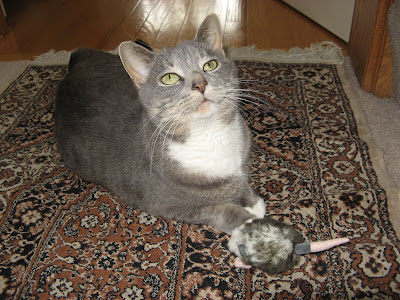
Some people have used bells that hang off of their doorknob to train dogs how to let them know when they want outside to use the bathroom. But how many of you have heard of a cat who has learned how to ring a bell to notify their owners of some sort of need?

Janet at Of Cats and Cardstock has taught her cat, Lily, how to ring a bell for food. Lily learned how to ring her bell for food and even got to the point that Janet had to confiscate the bell. However, Lily, being a very intellectual feline, found that one of her toys has a bell in it and decided to use that as the replacement for her bag of bells. 

Picture of Lily by Janet

Now that is a smart cat!

Teaching pets an alternative way to let us know things can come in handy, no more dog scratches in the door, and no more loud and crazy mewing from the cat who just wants an early dinner.

For the doggie "door bell" you could get some ribbon (probably 1" wide or wider) sew jingle bells or craft size cow bells every so often down the length of your ribbon (leaving a big enough empty spot at the top to tie around your doorknob.) And make the ribbon long enough for "Fido" to reach with his/her paw.

For the Kitty "dinner bell" get some scrap fabric (cotton or some other organic type that will not harm your cat if she chews on it) cut out 2 squares or rectangles (choose a size that you feel would be appropriate for your kitty. and sew together 3 sides with the side that you want to show, facing each other. Then flip the fabric right side out. Place a few jingle bells inside (you can also stuff it if you want the bells to sound more muffled) then stitch together the open end.

Hope your pet bell ringing training goes well!

And thank you Janet for allowing us to feature Lily in our blog!

Update:

From Janet: I actually got the idea to teach Lily because I knew of a dog who had been trained to use a doggie door bell as you describe. I'm sure Lily could have been trained with a hanging bag, just like a dog, but I used a cloth bag which sits on the floor next to her food bowl.

It took about 2 weeks of training for her to consistently ring the bells for food. At first I wiggled the bag with her paw so she'd hear the bells then gave her a nibble of her food. I kept doing this until she associated the sound with the food. I also repeated the command "ring the bell" until she learned to do it herself. I would love to hear any success stories! :)

From a Facebook friend:  our rabbit uses one, its rather silly, and adorable at the same time.

Wednesday, February 2, 2011

Bells for your Scarecrow

On Pressure Cooker Outlet's blog we talked about the benefits of having an edible garden. Now, what if you go ahead with your garden only to discover that the birds are feasting upon your hard worked for vegetables & fruits? One method that has been used since America was first settled is the Scarecrow.

Making a scarecrow does not have to be a difficult task.

Materials:
2x4 board 6 to 7 feet long
2x4 board 3 to 4 feet long
Hammer
Nails
Rope
Hay or something to stuff with
Old unused clothing (great way to recycle some items)
Ribbons
Something to make noise (BELLS!)
(needle and thread may be needed depending on the bells you decide to use)
Old pillow case

Directions:
  1. Place the longer 2x4 on the ground, nail the shorter one to it in a lowercase t shape, so that it is low enough to be considered arms.
  2. When you dress your scarecrow if using pants, put the long piece of lumber through one leg, stuff both legs with straw or other stuffing and tie the waistband to the board.
  3. Place the scarecrow in its garden spot and pound the frame into the ground.
  4. Finish dressing the scarecrow by putting on its shirt and stuffing the arms.
  5. Fill the pillowcase with straw for the head and slip it over the top of the board; tuck the pillowcase end into the shirt and use rope to secure the head to the frame.
  6. Add finishing touches, like a face, hat, gloves etc.
  7. Place ribbons streamers, bells, pie plates or chimes so they’ll move when the wind blows, if desired.
We recommend sewing mini cow bells to the ends of about half of your ribbons before tying them onto the scarecrow.  This will add much needed racket and it will ensure that the bells are well placed so that they do not fall off. Jingle Bells will work as well.


Now you are ready to go!
Related Posts Plugin for WordPress, Blogger...